
We were in Maidenhead, Berkshire this week where, on a late night amble round the garden, the dog came across a sweet nocturnal resident:

It was lovely to see the hedgehog, which looked a good size to survive the coming winter and didn’t need worrying about.

The next morning the dog told us that the hedgehog was in the sturdy hedgehog nest box tucked away deep in the shrubbery.
In all the excitement over the hedgehog, we left the garden lights on overnight in error and, by the morning, they had attracted in a moth that I have never come across before. The green-brindled crescent below has evolved to fly from September to November when there are less predators such as bats and spiders about and the birds are not feeding young:

We used to live in Maidenhead before moving to Kent and now love to have the opportunity to revisit some of our favourite dog walks. I first went to Ashley Hill on an infant school outing in the mid 60s, not so very long after it had been completely clear-felled and replanted by the Forestry Commission. It looks very different indeed these days:

The photo below was taken almost exactly ten years ago on 1st November 2016 soon after the most recent thinning by Forestry England. It shows a very much younger dog and a most impressive shaggy ink cap, also called the lawyer’s wig fungus:

We saw some lovely fungus this time too including several magpie ink caps, which feed on tree debris in woodland on calcareous soil:

I think these big dinner plate-sized toadstools are parasol mushrooms:


The false chanterelle, below, is considered a dry-weather mushroom and is often plentiful when other toadstools are scarce:

The collared earthstar is quite an a amazing thing:

It is a fungus of beech woodland in southern Britain and there are certainly some lovely areas of beech on Ashley Hill:

At the very top of the hill there is a single tree that stands 45m high and dwarfs all of its fellows:

Another old haunt of ours is Carpenters Wood, now a Woodland Trust nature reserve. There is a stand of silver birch there which can support a most impressive display of fly agarics some years.

This year there were very few of these fungal fruiting bodies growing amongst the birches, although we did see a few:


We found another extraordinary-looking parasol mushroom as well:

With Remembrance Day nearly upon us, it seemed especially appropriate to pay our respects at the memorial in Carpenters Wood, where a Halifax bomber crashed on 18th July 1944 with seven men onboard and loaded with bombs destined for France.

Now over eighty years on, a large crater from the explosion still remains:
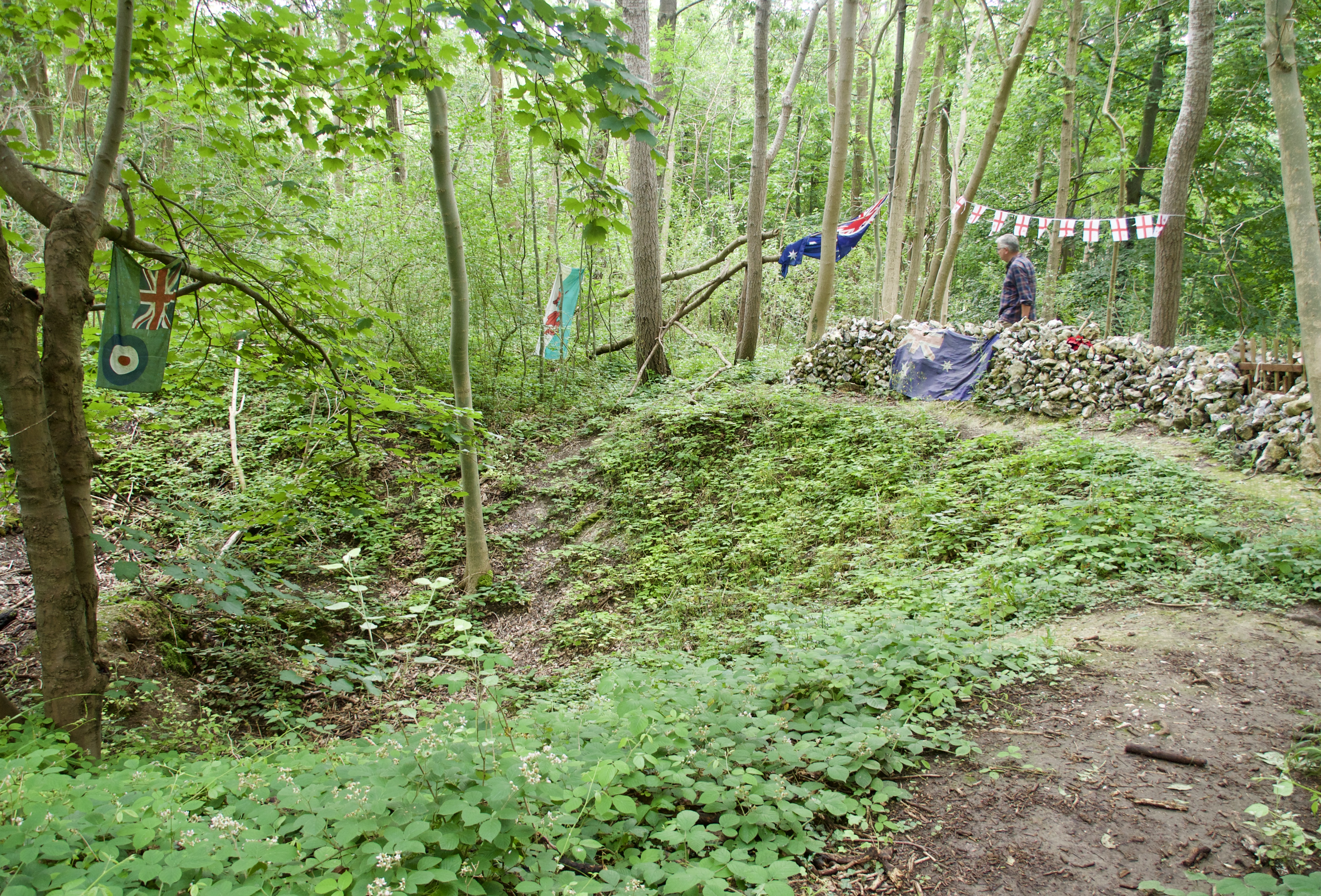
A plaque there reads ‘Tread Softly For This Is Hallowed Ground’.
Back in the meadows, we installed a tawny nest box in a small copse of trees last week:

There is now a camera in position on a pole there and, although the box has only been up a few days, it seems that the owls have already discovered it. Let’s hope they liked what they saw:

I have some photos of the Grande Dame of the Meadows this week. This kestrel was ringed here as a young bird in September 2019 and is now seven and a half years old:

And here they are together:

She has learnt to coexist with the crows and magpies that usually vigorously defend the meadows from incoming raptors:

October to December is the peak time for fox dispersal, particularly young males looking for new territories. There is a hole under the fence alongside this gate and that is what the resident foxes use, so any fox going over the top like this is probably new around here:

This week I got going on an outstanding autumn job to clean the potting shed and bring tender pots into it for protection through the winter. As I sorted through the seed trays, I came across a hibernating common wasp queen:

It was a good opportunity to revise the differences between the common wasp and the german wasp, the details of which I had forgotten:

We have seen a lot of evidence to demonstrate what an important part both common and German wasps play in the food chain. Their nests provide valuable nutrition for badgers during the summer when worms are scarce, and they are the major food source of honey buzzards, such as the one seen in the wood this summer. Invertebrates such as Volucella hoverflies use the protection of the wasp nest to bring up their own young as well. The adult wasps are also important pollinators and predators of pests. So, bearing all this in mind, I put the seed trays back as they were and left the queen to continue to snooze her way through the winter.
As well as a plentiful supply of spider cocoons, I also found this young lady who had flown into the potting shed and was having trouble finding her way out:

She is a parasitic wasp, but most are notoriously tricky to identify and generally require a microscope. She might be Pimpla sp, in which case she would be using that terrifically long ovipositor at the end of her abdomen to seek out moth caterpillars hiding in crevices and lay her eggs into them.
There is a bench at the very top of the meadows with a commanding view out sea. Dave in particular loves to sit there with his binoculars or birding scope to see if anything interesting is about. If the waters are choppy, he is often rewarded by seeing gannets plunging in after fish but this week it was an unusual vessel going by that caught his eye:

Voltaire is the world’s largest jack-up turbine installation vessel and she stands taller than the Eiffel Tower when at full stretch. Those jack-up legs allow her to work in water depths of up to 80m and she is currently working on the Dogger Bank wind farm situated in the North Sea, 130-200km off the Yorkshire coast. This is under construction at the moment but is set to become the biggest off-shore wind farm in the world. Eventually it will produce enough electricity to power 6 million UK homes annually.

Another ship to add to the list of extraordinary vessels we have seen sailing by.
You found a wonderful collection of fungi. I am very envious.