
John the bird ringer sent me this photo of a woodcock that his son had found resting on the deck of his ship, not far off the Norwegian coast.

Although the woodcock is very obvious on the red deck of the ship, it is normally exquisitely camouflaged, disappearing from view when roosting by day on a leaf-strewn woodland floor.

There is a small population of woodcock that breed in this country but their numbers are boosted a hundredfold in the autumn when birds from north-east Europe and Russia arrive here to enjoy our milder winters. Every year a fair number come to our wood and we enjoy night time trail camera photos of them throughout the winter until they leave again in the spring.

Back in November 2018 Dave discovered that one of these lovely birds had flown in off the sea and unfortunately straight into his study window, breaking its neck. The fact that it had just arrived at its destination after a long and arduous journey across Europe and the North Sea made the whole thing even more sad.


The underside of a woodcocks tail feathers are very white indeed. In fact they are 30% brighter than the white on any other bird, since it uses them for courtship display at night. The grey upperside, however, ensures that its daytime camouflage is not compromised. Below you can see the grey upperside and the white underside of the tail feathers:


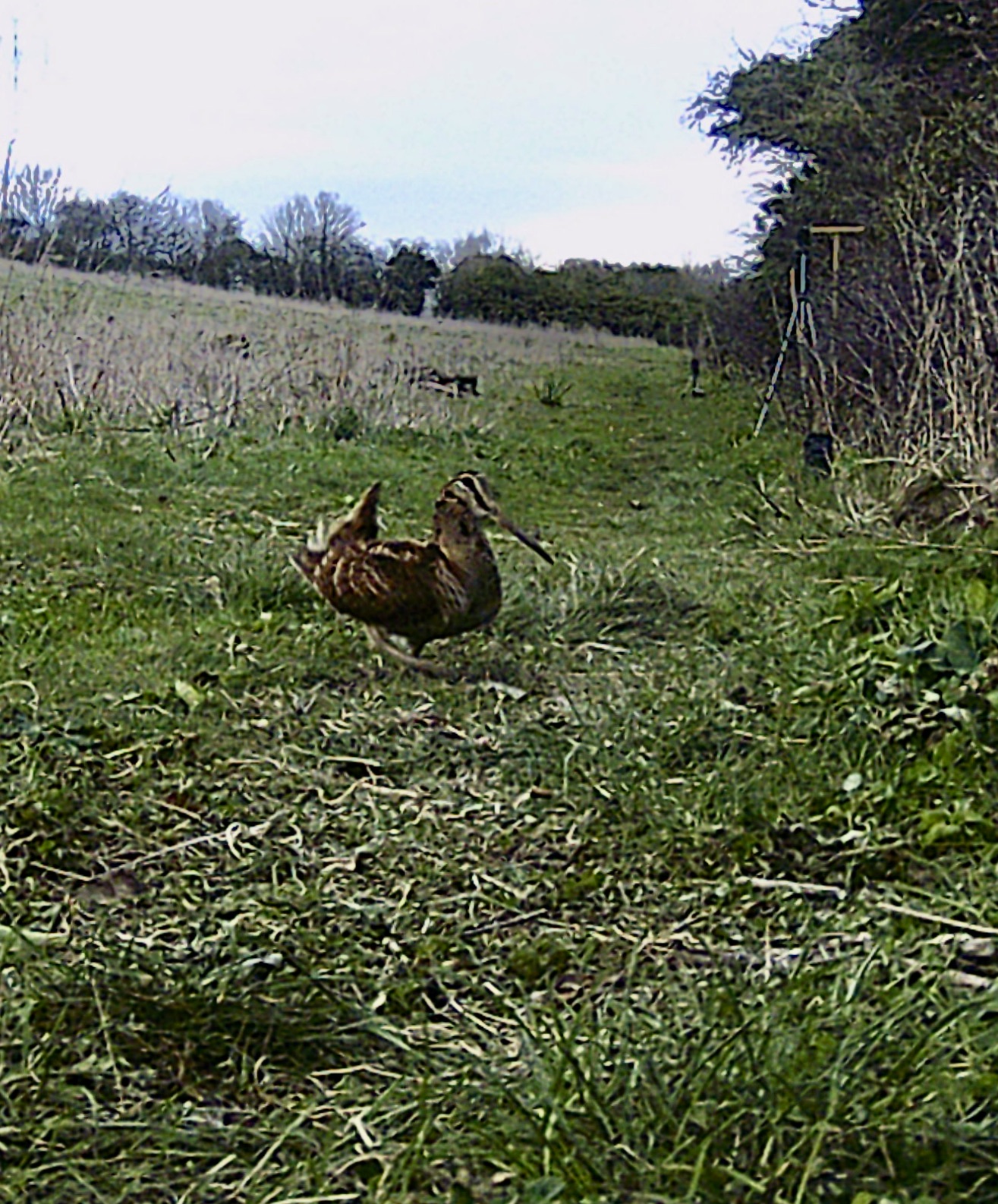
Although these overwintering birds won’t be displaying whilst in this country, I do have trail cameras footage of them flaring their tail up to reveal the white. Photos from February 2021 and March 2023:

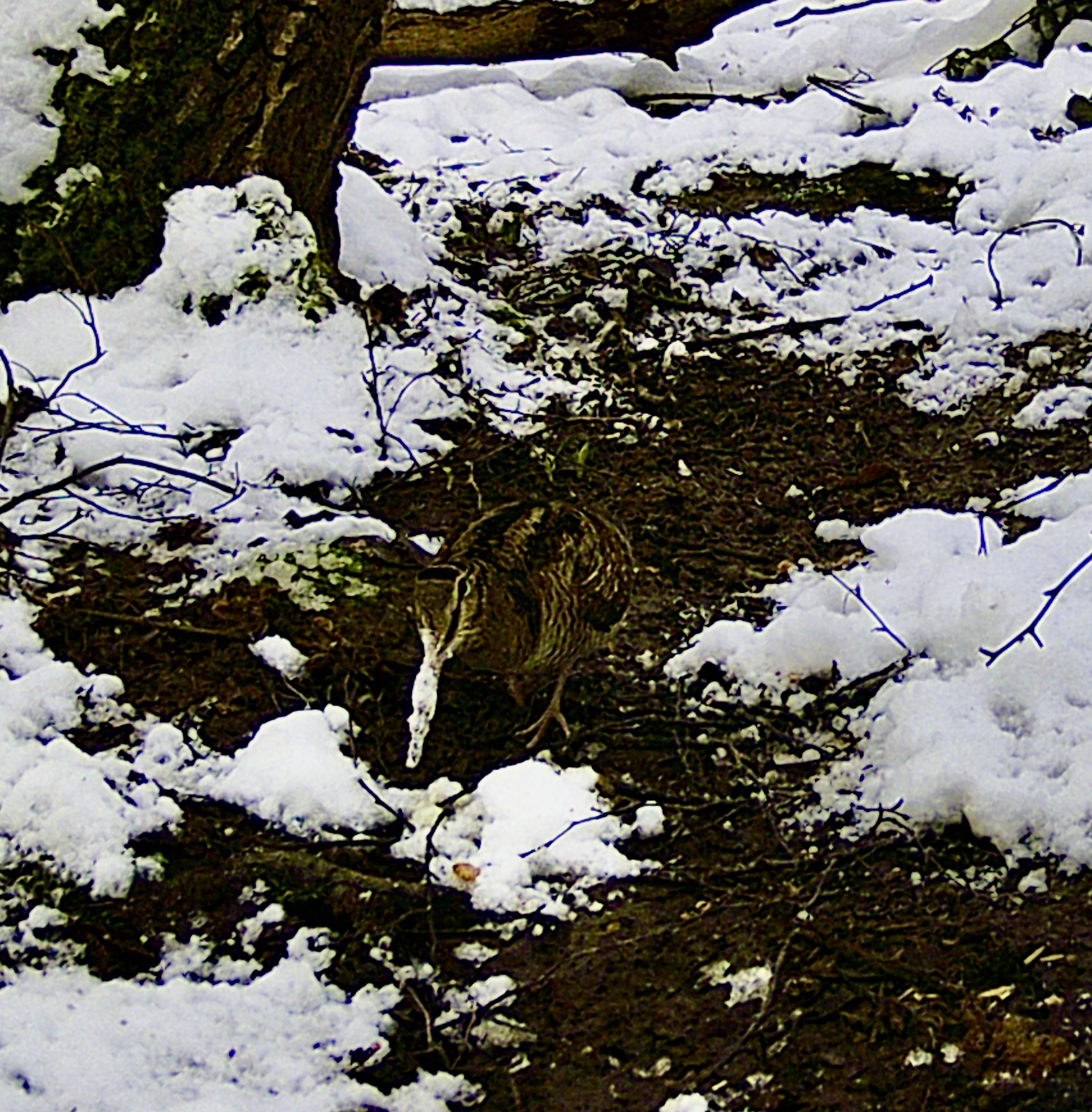
Woodcock feed by probing their long beak into the soil and they would not survive if they stayed in colder climes where the ground will be frozen for most of the winter. This country, however, does have its own adverse weather from time to time and I love this photo from our wood in February 2021:
Blackbirds also arrive in the UK for the winter from the colder parts of Europe, boosting our resident population. There are five blackbirds in the photo below, taken this week in the wood, which is something that we would never see during the summer:


There has been a lot of rain and dull, grey days recently and these conditions are not good for the trail cameras. However, I have got the following photos of the birdlife of the meadows at this time of year:


An area of our back lawn between a cherry and an apple tree looks like it has been keeping the badgers entertained:

Badgers are omnivores, eating a wide range of different foods, but they particularly like to dig in the soil for worms and other invertebrates such as leatherjackets and beetle grubs. The roots of the trees create a more complex soil structure and this area will no doubt be harbouring more insects and grubs than other parts of the lawn
We have a trail camera looking at a badger tunnel entrance on the steep cliff below the meadows. Recently there have been a lot of photos of badgers emerging from this hole and hardly any of them going in. I am taking this as evidence that this low tunnel is connected to the rest of the sett further up the slope:

At the bottom of the cliff is the beach and over the years we have lots of photos of foxes carrying fish. A fox this week has got itself a dogfish, which it has carried back up the cliff and is about to go under the fence and into the meadows with it:

The candlesnuff fungus, Xylaria hypoxylon, that we have growing in the meadows this winter, is one of the very few British fungi to show bioluminescence, although it glows too weakly to be detected by the human eye:


Over in the wood there has been another sighting of an unknown mustelid:

I presume that this is the same animal that our woodland neighbours caught on their trail cameras last month:


I was in Maidenhead in Berkshire again recently and went on a birdwatching trip to the nearby Little Marlow gravel pit. It is always refreshing to see birds there that I wouldn’t normally see at home:


I finish this week with the absolutely gorgeous Willesborough Windmill near Ashford. We recently accompanied our train-mad young grandson to an exhibition by the Ashford Model Railway Club which was being held in a barn alongside the mill. This windmill, which can still grind flour, is really close to the M20 motorway but we had never spotted it before or known that it existed:


The mill is open to the public on summer weekends and we have put it onto our To Do list for 2026.
They were good eating in Minnesota , but gosh they are fast ❗️
They probably need to be fast if they are good to eat!
I love windmills so I am envious of your opportunity to visit that one.
That windmill does look to be a particularly fine specimen and it’s fantastic that the sails still turn and it can still produce flour. On the downside it is now in the middle of some modern housing at the edge of a motorway but nonetheless will be very interesting to visit next year.
So lucky to have woodcocks visit. The feather detail in your photos are beautiful. X